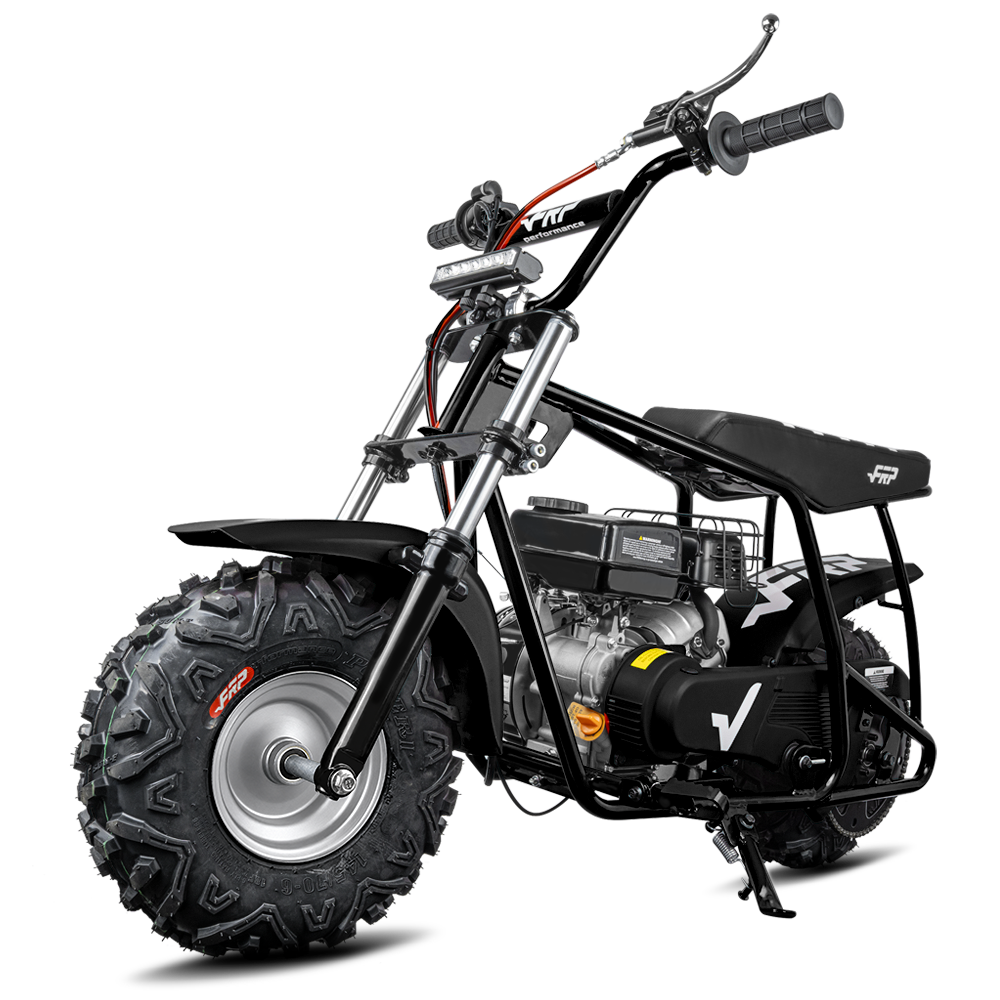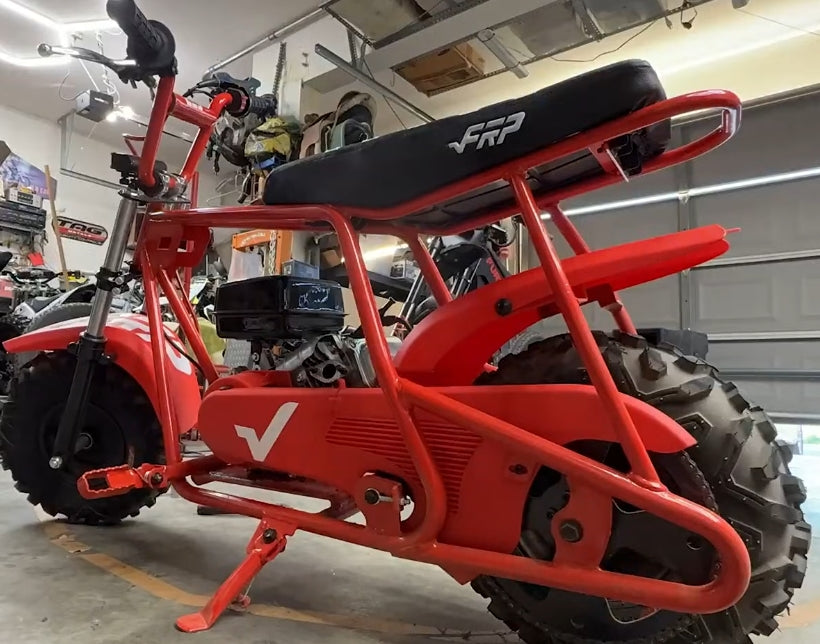

The FRP GMB100 99cc mini bike tops out at 24 mph — and on a machine that weighs 79.5 lbs, that number hits harder than it looks on paper. How fast is 99cc in real riding terms? It's the point where your shirt starts pulling at your chest, where the ground detail under your 145/70-6 tires blurs at the edges, and where you stop thinking about the bike and start thinking about the next turn. The FRP GMB100 is rated to that 24 mph ceiling with a 99cc 4-stroke OHV engine that requires no fuel mixing and no warmup ritual — pull start, throttle, go. This article breaks down exactly what produces that speed, what limits it in real conditions, and how to get the most out of every ride.
Compare all sizes: how fast does a mini bike go by engine size — 40cc to 212cc speed chart.
Table of Contents
- The Direct Answer: How Fast Does a 99cc Mini Bike Actually Go?
- What Makes a 99cc Engine Produce That Top Speed?
- 99cc Mini Bike vs 100cc Mini Bike: Is There an Actual Speed Difference?
- What Actually Affects Your Mini Bike's Top Speed on the Ground?
- How to Make a Mini Bike Go Faster in 4 Proven Steps
- How Fast Is 99cc in MPH Compared to Other Powersports Options?
- Why 24 mph Is the Right Speed for This Type of Riding
- FAQ

The Direct Answer: How Fast Does a 99cc Mini Bike Actually Go?
The FRP GMB100 reaches a verified top speed of 24 mph under standard test conditions — single rider, flat terrain, full throttle. That's fast enough to generate genuine wind resistance and enough ground speed to demand focus from the rider. It's not a casual pedal-bike pace; at 24 mph on a 79.5 lb frame, every input you make through the twist-grip throttle and rear disc brake is a deliberate act of control. The 30-mile range on a 0.36-gal fuel tank means you can sustain that speed across a full session without stopping to refuel mid-ride.
What Makes a 99cc Engine Produce That Top Speed?
The GMB100's 99cc OHV (overhead valve) 4-stroke engine is the mechanical reason this machine moves the way it does. OHV design positions the valves above the combustion chamber, which improves airflow efficiency and produces stronger torque relative to displacement — more pull from the same cubic centimeters. The 4-stroke cycle also means no fuel-oil premixing required, so the combustion input is consistent every pull. A lighter machine — 79.5 lbs — means that torque output translates directly into acceleration rather than fighting inertia, which is why the GMB100 feels responsive in a way that heavier powersports vehicles simply can't replicate at the same displacement.
99cc Mini Bike vs 100cc Mini Bike: Is There an Actual Speed Difference?
The 1cc difference between "99cc" and "100cc" produces no measurable speed variation — it's a labeling convention, not an engineering distinction. Both displacements occupy the same performance band, and real-world top speed variation between two machines in this range comes down to factors like rider weight relative to the 220 lbs max load rating, gearing ratio, tire condition, and aerodynamic drag — not the nominal displacement number. A 100cc machine with worn tires and a loose chain will run slower than a well-maintained 99cc bike with proper setup. Focus on the variables you can control, not the cc label on the spec sheet.
What Actually Affects Your Mini Bike's Top Speed on the Ground?
Six variables determine whether you hit 24 mph or fall short of it in actual riding conditions. Rider weight is the most significant: the GMB100 is rated to 220 lbs max load, and operating near that ceiling reduces acceleration and lowers achievable top speed on inclines. Terrain gradient matters directly — a 5% uphill grade can reduce effective top speed by 4–6 mph on a small-displacement machine. Tire pressure in the 145/70-6 pneumatic tires affects rolling resistance; underinflated tires bleed speed before the engine can build it. Chain tension, air filter cleanliness, and fuel quality round out the list. Most speed loss between the spec sheet and the ground comes from maintenance deferred, not from the engine itself.

How to Make a Mini Bike Go Faster in 4 Proven Steps
Step 1: Set tire pressure correctly — check the 145/70-6 tires before every ride session; even a few PSI below spec creates rolling resistance that costs you at the top end.
Step 2: Dial in chain tension — a chain that's too loose slaps and skips under load, robbing power transfer between the engine and rear wheel; a chain that's too tight creates drag. Check tension and adjust to spec as outlined in the GMB100 user manual.
Step 3: Evaluate sprocket sizing — a smaller rear sprocket increases top speed at the cost of low-end torque; this is the single most effective mechanical modification for top-speed-focused riders.
Step 4: Inspect and clean the air filter — a clogged filter restricts airflow into the 99cc OHV engine, which directly limits combustion efficiency and peak power output. These four steps address the most common real-world speed limiters without touching the engine internals.
How Fast Is 99cc in MPH Compared to Other Powersports Options?
Placing 24 mph in context makes the number easier to evaluate. A 50cc children's dirt bike typically tops out between 20–25 mph — the GMB100's 99cc engine clears that ceiling with room to spare. A trained cyclist at full sprint reaches around 25–30 mph, which means the GMB100 runs at competitive human-performance speed on flat ground. A 125cc pit bike can reach 45–55 mph in stock form, so the 99cc machine sits below full pit bike performance — but also below full pit bike weight, complexity, and maintenance demands. For private land riding, backyard tracks, and off-road parks where top-end speed is secondary to maneuverability and fun, 24 mph is the right number in the right machine category.

Why 24 mph Is the Right Speed for This Type of Riding
The GMB100's 24 mph ceiling isn't an engineering limitation — it's a deliberate performance calibration for the way this machine gets used. On private land, in off-road parks, and across the backyard terrain where mini bikes actually operate, 24 mph is fast enough to create real riding demands: body position shifts, weight transfer through corners, and braking decisions that require attention. The rear disc brake on the GMB100 is sized to handle that speed with authority — a 79.5 lb machine stopping from 24 mph is a physics problem this brake system is engineered to solve. Push beyond this speed band, you're in pit bike or full motorcycle territory, where the riding infrastructure, licensing requirements, and safety gear demands scale up significantly. The 99cc Buy the FRP GMB100 99cc gas mini bike delivers genuine performance within a category that stays accessible.
FAQ
Does the FRP GMB100 top speed change with a heavier rider on board?
Yes — heavier riders will see reduced top speed, particularly on inclines. The GMB100 is rated to 220 lbs max load; riders near that ceiling can expect top speed to decrease by several mph on anything other than flat terrain. Riders well below the load limit will reach the full 24 mph more consistently across varied terrain.
What fuel octane rating does a 99cc 4-stroke mini bike engine need to run at full performance?
Regular unleaded gasoline (87 octane) is the correct fuel for the GMB100's 99cc 4-stroke OHV engine. Higher octane fuel provides no performance benefit in a low-compression small engine and costs more without a return. Use fresh gasoline — fuel older than 30 days can degrade, gum the carburetor, and reduce engine performance noticeably.
Is 24 mph fast enough to be dangerous for a beginner rider?
Yes, 24 mph demands rider attention and basic throttle control. Beginners should start at partial throttle, learn braking distances on their specific terrain, and wear a helmet and protective gear regardless of speed. The GMB100's twist-grip throttle allows precise speed control — build speed gradually until your reflexes and confidence match the machine's capability.
How often should the chain and sprocket be checked to maintain consistent speed performance?
Check chain tension and lubrication every 5–10 hours of riding, or before any extended session. A dry or slack chain is the most common cause of gradual performance loss that riders attribute to engine issues. Inspect sprocket teeth for wear during each chain check — hooked or asymmetrically worn teeth signal it's time for replacement before they start skipping under load.
Can you legally ride a 99cc mini bike at full speed on any public trail or park road in the US?
Generally, no — the GMB100 is an off-road vehicle not registered for public road or trail use in most US jurisdictions. Some BLM lands and designated OHV areas permit unregistered off-road vehicles in marked zones, but public parks and paved trails are typically off-limits. Confirm your specific riding area's OHV regulations before operating at any speed on public land.